
A bed frame is always bigger than the mattress it holds — sometimes by a few inches, sometimes by nearly a foot. That is why bed frame sizes never match mattress sizes exactly, and why a frame that “should” fit can still swallow a room or refuse to go up the stairs. This chart gives the typical overall dimensions of every standard frame size, set against the mattress it is built for.
The number that actually decides fit is not the outside of the frame but the inside: the space between the rails must be at least the full size of your mattress. Keep that one rule in mind and the rest of this page is just measuring.
Short answer: Bed frame sizes run bigger than mattress sizes. A typical frame adds roughly 2–5 inches of width and 4–9 inches of length for its rails, headboard and footboard — a Queen mattress (60 × 80 inches) usually sits in a frame about 63–67 × 84–89 inches overall. Always check the frame’s inside dimensions before buying: they must be at least the mattress size.
Bed Frame Sizes Chart: Mattress vs Overall Frame Dimensions
| Size | Mattress (in) | Typical Overall Frame (in) |
|---|---|---|
| Twin | 38 × 75 | ~41–45 × 79–84 |
| Twin XL | 38 × 80 | ~41–45 × 84–89 |
| Full | 54 × 75 | ~57–61 × 79–84 |
| Queen | 60 × 80 | ~63–67 × 84–89 |
| King | 76 × 80 | ~79–83 × 84–89 |
| California King | 72 × 84 | ~75–79 × 88–93 |
These ranges are typical, not fixed. Exact dimensions vary by style and manufacturer — a slim metal platform and a padded sleigh frame for the same mattress can differ by 6 inches or more — so always check the product specs, and check the inside dimensions above all: the inside must measure at least the mattress size, or the mattress will not drop in. The Sleep Foundation’s bed frame sizes guide lists similar typical ranges and makes the same point about measuring the inside, not the showroom footprint.
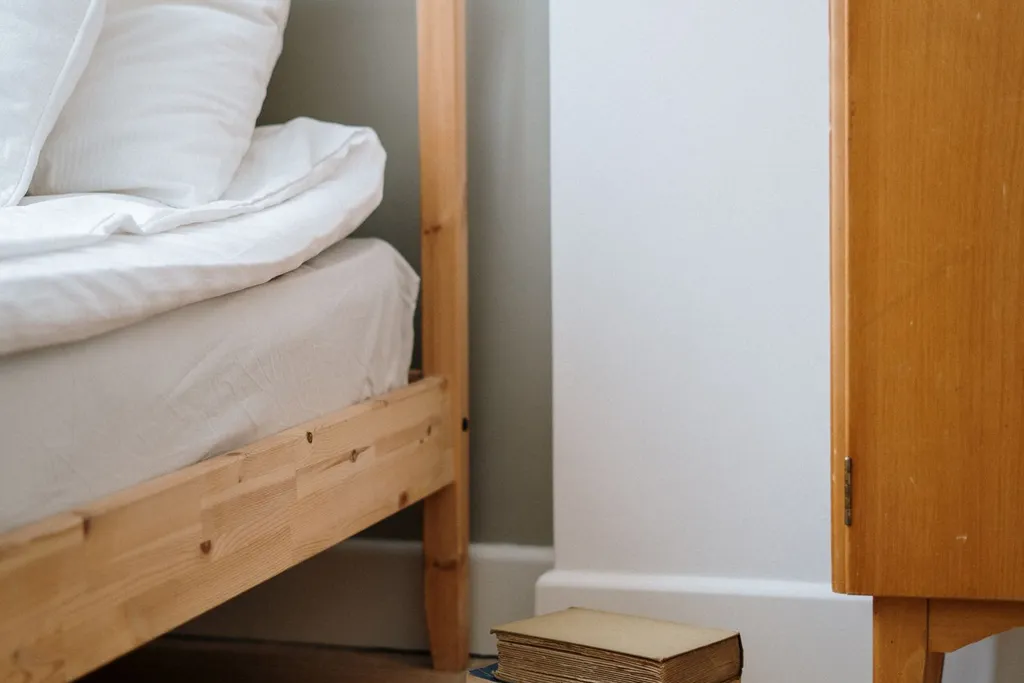
Why Bed Frames Are Bigger Than the Mattress
Three parts of the frame eat space. The side rails run the length of the bed on both sides, and the ledge the slats sit on is inside them. The headboard and footboard add posts and panels at both ends, which is where most of the extra length comes from. And the frame needs a little clearance built in, so the mattress can drop between the rails instead of being forced.
The inside of a well-made frame measures the mattress size plus a small allowance — up to about 2 inches of total slack is normal and lets bedding tuck down the sides. Much more than that and the mattress slides around; less than the mattress size and it simply does not fit. This is also why two frames sold as “Queen” can measure differently and both be right: the name describes the mattress it holds, not the frame itself. For the mattress footprints themselves, see our Queen size mattress dimensions and King size bed dimensions guides.
Bed Frame Sizes by Style: Platform, Panel, Sleigh and Metal
Style is the biggest reason frame dimensions spread across a range. As a rule, the simpler the frame, the closer it sits to the mattress:
| Frame Style | Typical Extra Width | Typical Extra Length |
|---|---|---|
| Platform | +2″–4″ | +3″–5″ |
| Metal rail frame | +2″–3″ | +4″–6″ |
| Storage / divan base | +1″–2″ | +1″–3″ |
| Panel (headboard + footboard) | +3″–5″ | +6″–9″ |
| Sleigh | +4″–6″ | +8″–12″ |
Platform frames sit closest to the mattress size — a low base with no footboard, often the only style that fits a tight room. Metal rail frames are nearly as lean: thin steel rails, a separate headboard, nothing else. Storage and divan bases are built almost exactly to the footprint, but allow side clearance for the drawers to open. Panel frames add a real headboard and footboard, and sleigh frames — with their scrolled, padded ends — are the largest of all and the first to check against your room.

How to Measure a Room and a Frame Before You Buy
Work through three measurements, in this order:
- The room. Take the frame’s overall size from the chart, then add walkway space: at least 24–30 inches on both sides and at the foot. A Queen frame at 65 × 87 inches in a 10 × 10 room leaves walking space on only two sides — workable, but tight.
- The route in. Doorways, hall turns and stairs decide whether a headboard or assembled frame gets into the room at all. Measure the narrowest point on the route, and check whether the frame ships flat-packed or assembled.
- The frame itself. If you are replacing only the mattress, measure the inside of your existing frame — width between the rails, length from headboard to footboard — before ordering, and order against those numbers, not the frame’s name. Our mattress size guide will confirm which standard size your inside measurement points to.

Will My Mattress Fit This Frame?
A mattress that is slightly smaller than the frame’s inside — a gap of an inch or two in total — is normal and harmless; bedding and a mattress protector fill most of it, and the gap stops the mattress binding against the rails. The reverse is not fixable. A mattress that is bigger than the inside, even by an inch, cannot be forced in without bowing the rails and damaging the mattress — and it usually voids the warranty. Check both directions: width between the rails, and length between headboard and footboard. The standard footprints are listed in the Sleep Foundation’s mattress sizes guide if you need a second reference for the mattress itself.
Related Mattress Size Guides
- Mattress Size Guide — every mattress size, one chart
- Queen Size Mattress Dimensions — 60″ × 80″
- King Size Bed Dimensions — 76″ × 80″
- Full Size Mattress Dimensions — 54″ × 75″
Sources: Sleep Foundation — Bed Frame Sizes guide; Sleep Foundation — Mattress Sizes guide.
Frequently Asked Questions
Are bed frame sizes the same as mattress sizes?
No. A frame is named for the mattress it holds, but the frame itself is bigger — typically 2–5 inches wider and 4–9 inches longer overall, for its rails, headboard and footboard. The inside of the frame is the dimension that has to match the mattress.
What size frame do I need for a queen mattress?
A Queen frame — one sold for a 60 × 80 inch mattress. Check the inside dimensions before buying: they must be at least 60 × 80 inches. Overall, expect a Queen frame to measure roughly 63–67 inches wide and 84–89 inches long.
Can a full mattress fit in a queen frame?
No, not properly. A Full mattress is 54 × 75 inches, leaving a gap of about 6 inches in width and 5 in length inside a Queen frame. The mattress slides, the bedding pulls loose, and the unsupported edges wear out early. Use a Full frame for a Full mattress.
How much bigger is a king frame than a king mattress?
A King mattress is 76 × 80 inches; a typical King frame is about 79–83 inches wide and 84–89 inches long — roughly 3–7 inches wider and 4–9 inches longer, depending on style. A sleigh frame sits at the top of that range, a platform at the bottom.
Do I need a bigger frame for a thick mattress?
No — thickness is a height question, not a footprint question. A thicker mattress needs the same frame size, but check the rail and slat height instead: the mattress should sit high enough on the frame that its top clears the side rails, and a very deep mattress on a tall footboard can feel boxed in.